Tanzeel Insights 8: How Teachers Can Control Online Qur’an Classes Part One: (8:1)
In this article, we share the essential strategies that help teachers exercise control and maintain discipline and commitmen
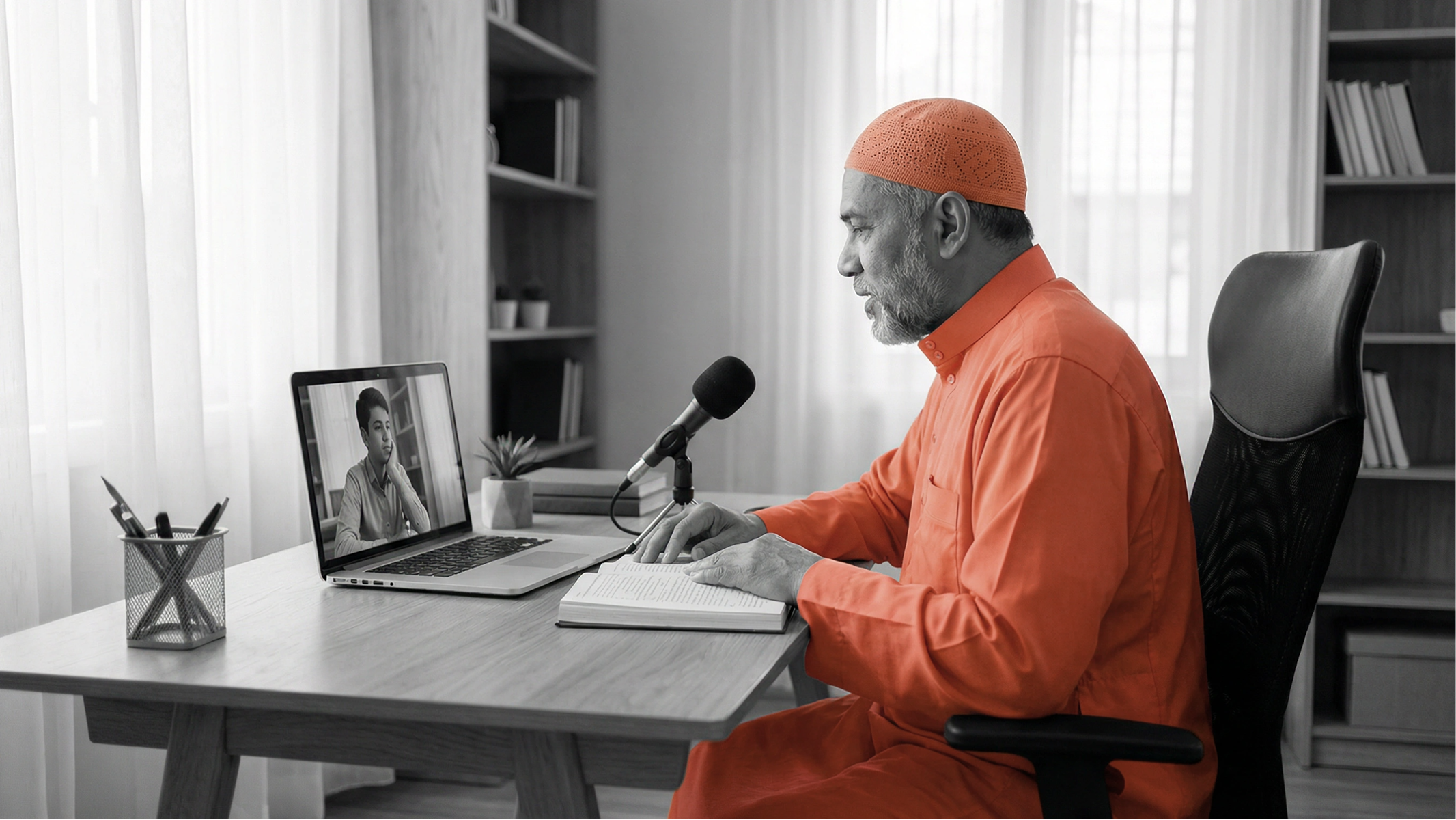
At Tanzeel, we know that the virtual classroom presents unique challenges for Qur’an teachers, particularly in maintaining control. Without a physical presence, maintaining focus and managing behavior requires different skills. A teacher might be an expert in Tajweed and Tafseer but still struggle to keep a young student engaged and attentive during an online session.
Therefore, learning such techniques is essential for online Qur’an teachers. In this article, we share the essential strategies that help teachers exercise control and maintain discipline and commitment in the online classroom.
1. Set and Enforce Boundaries from the First Class
Clear boundaries are essential for classroom control, but in online Qur’an classes—where the student is in their own home—enforcing them requires mutual agreement from the beginning. At Tanzeel, our Qur’an teachers agree on class rules with their students starting from the first class:
Common class rules include the following:
- Sessions start on time and end on time—no exceptions
- Cameras remain on (for children and adults), and audio quality must be clear.
- Background distractions (siblings, TV, phone notifications) should be minimized, and students are advised to take their classes in a separate room and their mobile phones should be silent during the class.
- Respectful language and attention are expected.
- Doing homework, assignments, and memorization tasks on time.
When these rules are violated, Tanzeel teachers address them privately and kindly. For a child repeatedly leaving the screen, the teacher might say: "I notice you're having trouble staying in your seat. Let's make a deal—if you stay focused for the next 10 minutes, we'll use the last 2 minutes to talk about your favorite surah." For an adult with constant interruptions: "I want to honor your time and mine. Could you please focus with me so we can make the best benefit out of our time?"
This way, discipline and commitment are achieved from the beginning through a mutual understanding in a way that preserves the dignity of everyone.
2. Establish Authority Through Warmth, Not Force
The essence of classroom control in online Qur’an classes is not dominance; it can be best achieved through mutual respect and appreciation. Students, whether children or adults, respond to Qur’an teachers who demonstrate control through care and affection.
At Tanzeel, we train our teachers to open every session with truthful warmth: asking about the student's day, remembering details from previous conversations, and expressing sincere pleasure at seeing them. This investment fosters a connection that encourages students to open up and cooperate.
However, this warmth must be paired with clear professionalism. The teacher controls the start and end times, directs the flow of activities, and gently the course of the conversation. Students sense when a teacher is confident in their role, and this confidence creates natural authority.
"Kindness is not to be found in anything but that it adds to its beauty, and it is not withdrawn from anything but that it makes it defective." — Prophet Muhammad ﷺ [Muslim].
3. Structure the class time well:
Tanzeel's online Qur’an classes are either 25 minutes or 50 minutes long, and teachers who struggle with control often lack clear time management of their classes.
At Tanzeel, our Qur’an teachers divide the session into different timely stages:
- Minutes 1-2: Ice breaker
- Minutes 1-2: Lead-in
- Minutes 2-5: Revision and checking the homework
- Minutes 7-15: Recitation and memorization
- Minutes 10-20: Tajweed Explanation / Tafseer Explanation
- Minutes 4-6: Closing the class, giving the homework, and a warm farewell.
This structure is communicated to students so they know what to expect. When a child knows that "free conversation time" comes at the beginning and end, but the middle is focused work, they are less likely to break the discipline. As for adults, they appreciate the professionalism and are more likely to be committed.
4. Master the Technology as Your Ally
In online Qur’an classes, the digital platform is not just a medium; it is an instrument of control. Tanzeel teachers are trained to use technology to maintain control.
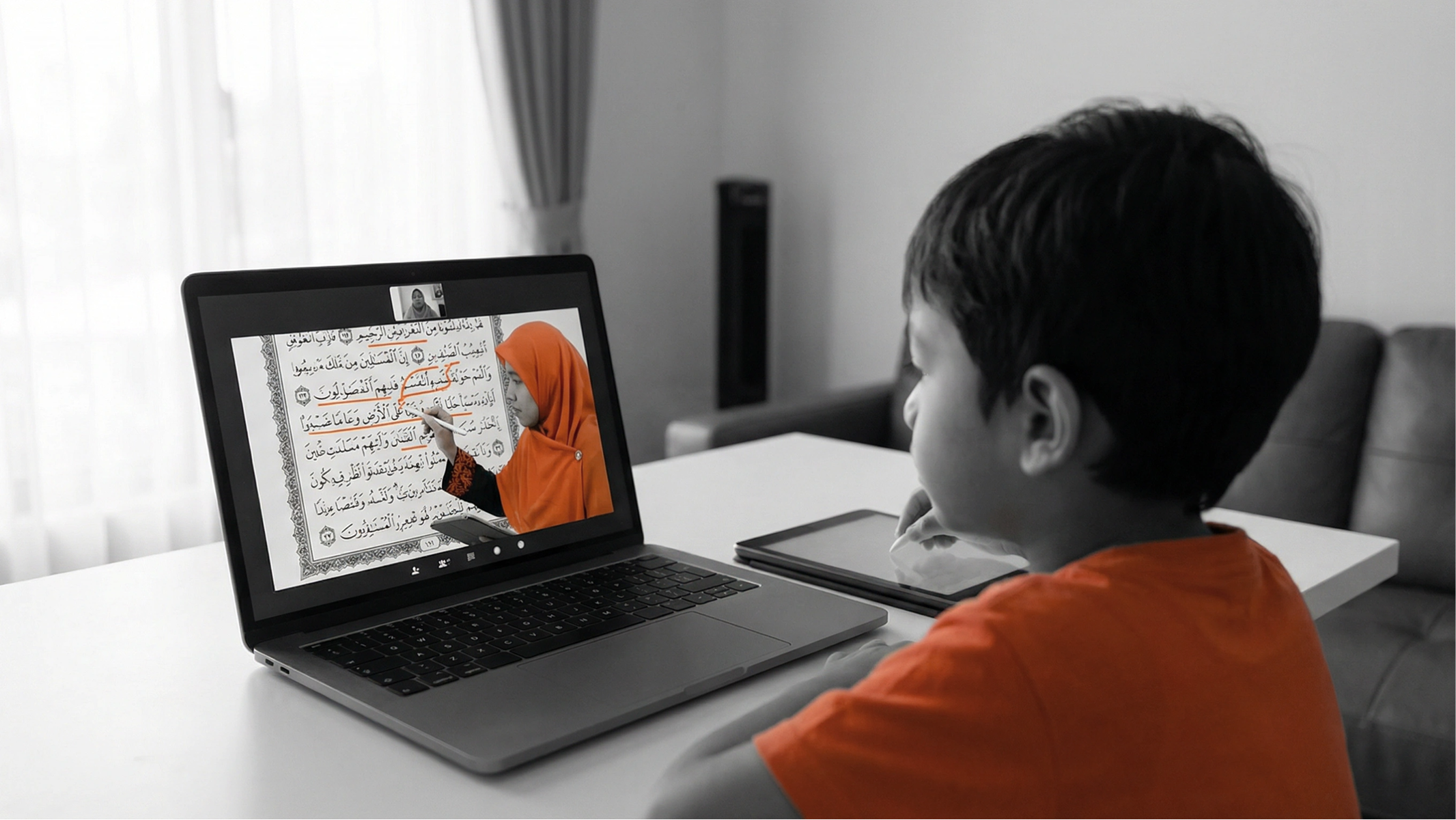
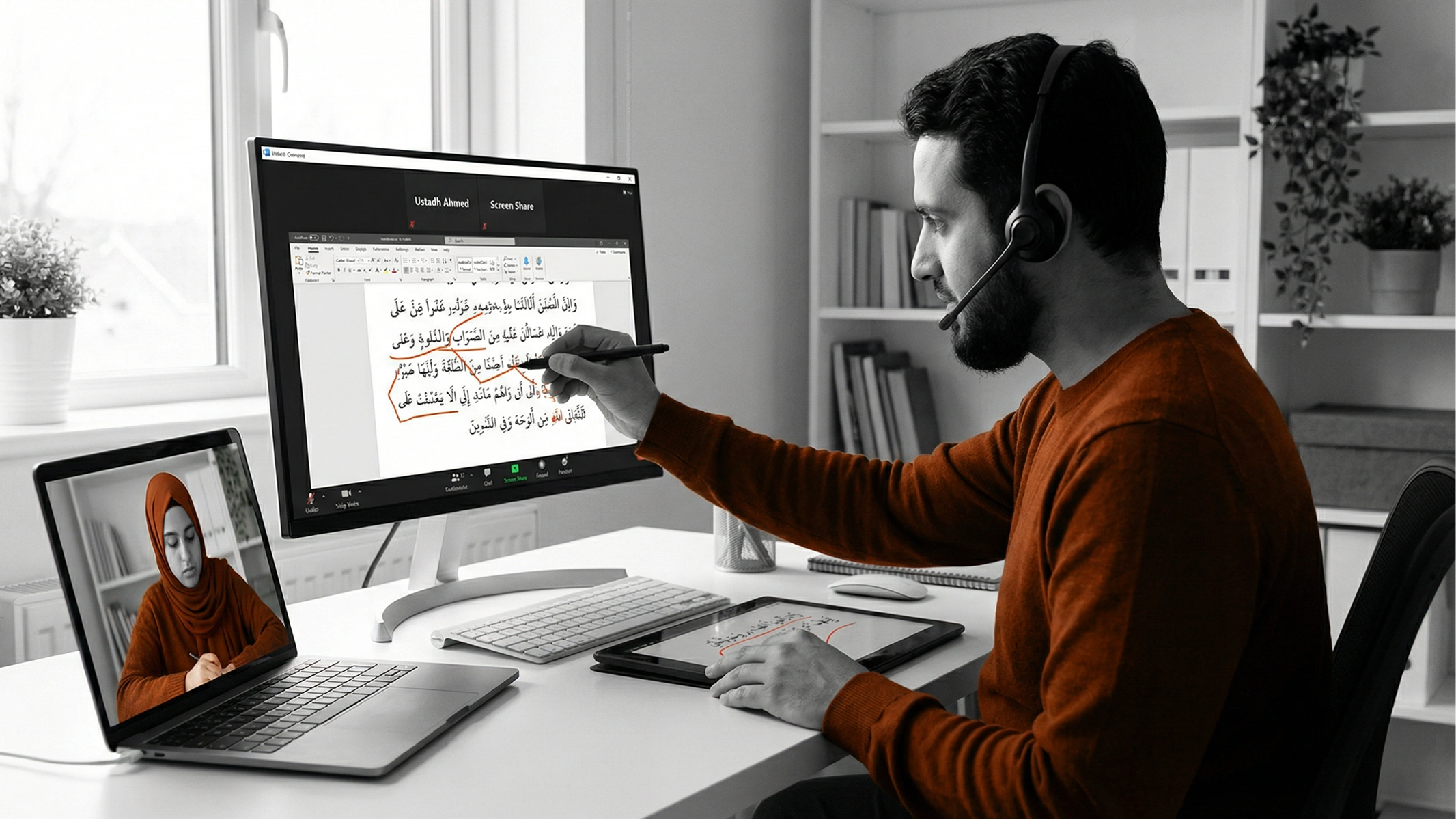
Screen control: The teacher controls what the student sees. Sharing specific verses, highlighting text in real-time, or displaying Tajweed diagrams keeps visual focus locked on the lesson. When a student's camera shows them looking away, the teacher immediately calls their name and asks them to read the highlighted portion—bringing attention back without confrontation.
Mute and unmute: For group settings or noisy environments, teachers use mute strategically. However, in one-on-one Tanzeel sessions, we emphasize keeping students unmuted to maintain human connection—using verbal engagement rather than technical restrictions to maintain focus.
Recording: Knowing that classes may be reviewed (with permission) encourages both teacher and student to maintain appropriate behavior and attention.
Generally, teachers should have a backup plan for technical failures. If a video freezes, immediately switch to audio-only with screen sharing. A teacher who panics when technology fails loses control; a teacher who uses technology well demonstrates mastery.
Frequently Asked Questions:
Q: Why is classroom control different for online Qur’an classes compared to physical ones? A: Without a physical presence, teachers cannot rely on proximity to manage behavior. Online control requires a different set of skills—primarily setting clear boundaries, building emotional rapport, and mastering digital tools to keep students engaged from a distance.
Q: What are the most important rules to set during the first class? A: According to Tanzeel’s framework, essential rules include:
- Strict punctuality (starting and ending on time).
- Cameras must remain on for both adults and children.
- Minimizing background distractions (TV, phones, or siblings).
- Taking the class in a separate, quiet room.
- Timely completion of homework and memorization tasks.
Q: How should a teacher handle a student who keeps leaving their seat or gets distracted?
A: Use gentle redirection rather than force. For children, try "the deal" method: promise a few minutes of fun or personal conversation at the end of the session in exchange for 10 minutes of focused work. For adults, appeal to their time: politely remind them that staying focused ensures they get the maximum benefit from the session.
Q: Does "control" mean being strict and dominant? A: Not at all. At Tanzeel, authority is established through warmth and mutual respect. A teacher who shows sincere care—asking about a student’s day and remembering personal details—creates a connection that makes the student want to cooperate.
Q: How can a teacher balance kindness with professionalism? A: While being warm, the teacher must remain the "pilot" of the session. This means managing the clock strictly, directing the flow of activities, and gently steering the conversation back to the lesson if it wanders too far.
Q: How can I use the screen to keep a student’s attention? A: Use the screen as an "instrument of control." Highlight specific verses in real-time or display Tajweed diagrams. If you notice a student looking away, immediately ask them to read the highlighted portion to bring their focus back without being confrontational.
Q: Should I use the "Mute" button to maintain order? A: In group settings, yes. However, for one-on-one sessions, Tanzeel recommends keeping students unmuted. This maintains a human connection and encourages verbal engagement, which is more effective than technical restrictions.
Q: What should I do if the internet connection or video fails? A: Stay calm. A teacher who panics loses authority. Have a backup plan ready, such as switching immediately to audio-only mode with screen sharing to ensure the lesson continues smoothly.


%201.png)