Tanzeel Interview (7) (Based on Tanzeel Insights 6) Meet our talented teacher, Rehab, who specializes in teaching students with Learning Difficulties in Tanzeel
This interview with our senior teacher Sis. Rehab Al-Qifl highlights the practical application of Tanzeel's methodology for

Meet our talented teacher, Rehab, who specializes in teaching students with Learning Difficulties in Tanzeel
This interview with our senior teacher Sis. Rehab Al-Qifl highlights the practical application of Tanzeel's methodology for teaching the Qur’an to students with learning difficulties.
Interviewer: As-salamu alaykum, Sister Rehab. We are pleased to host you today to discuss your experience teaching students with learning difficulties over the years. First of all, how long have you been working at Tanzeel?
Sis. Rehab: Alaykum Al-salaam wa rahmt Allah wa baraktuh. Thanks for allowing me to share my journey teaching the Qur’an in Tanzeel, especially to students with learning difficulties. I have been working at Tanzeel since 2012.
Interviewer: And how many students with learning difficulties have you taught during this period?
Sis. Rehab: Well, I have taught almost 55 students with various learning difficulties throughout my career.
Interviewer: Wow! This is a rather large number of students. Are they all in the same age group?
Sis. Rehab: No, 40 students were between the ages of 5.5 and 17 years old, and approximately 15 students were between 18 and 40 years old.
Interviewer: Wow! This is a rather large number of students. Are they all in the same age group?
Sis. Rehab: No, 40 students were between the ages of 5.5 and 17 years old, and approximately 15 students were between 18 and 40 years old.
Interviewer: Sis. Rehab, let us get into the details. At Tanzeel, we believe the Qur'an is a mercy for all of humanity, including those who process information differently. How do you begin a journey with a new student who has a diagnosis like dyslexia or ADHD?
Sis. Rehab: It starts with a partnership. Before the first trial, I review the student’s learning profile provided by our registration team. At the trial, I have an open conversation with the parents to understand the child's specific fears and motivations. I need to know if they struggle with visual tracking or if they need movement to process information effectively. Also, I discuss the study plan with the parent, trying to adjust their expectations to help me execute my plan.
Interviewer: What are the most common types of challenges your students face?
Sis. Rehab: The primary difficulties I have faced are dyslexia, general learning disabilities, and ADHD. These conditions require a very patient and specialized approach to ensure the student doesn't just repeat words, but actually processes and retains the information.
Interviewer: You mentioned specialized approaches. What are some of the specific techniques you use to keep these students engaged?
Sis. Rehab: My philosophy is that the student must love the teacher first; building that bond is essential. I use an "ice-break" period at the start of every journey. Some specific techniques include:
- Games: We play games like "X-O" and use continuous encouragement to keep spirits high.
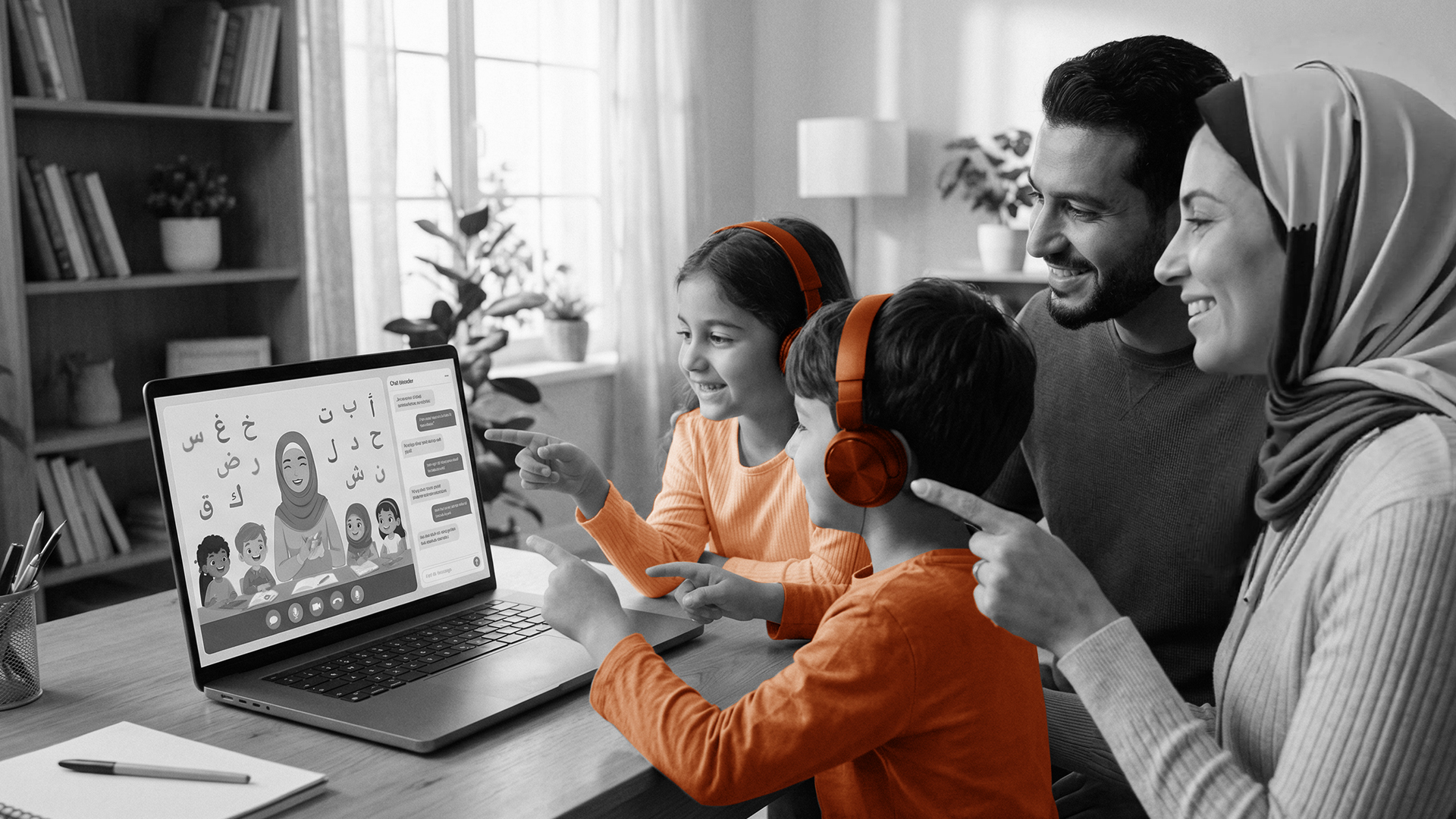
- Visual and Interactive Tools: I use both physical and online whiteboards, 3D models of letters, and interactive online games.
- Active Discovery: Instead of just reading to them, I might show a set of letters and ask, "Which one is missing?" This helps them focus on the details of the letters and their markings.
- Flexibility: If I see a method isn't working, I am prepared to change my entire approach instantly within the same session to better suit that student's personality.
Interviewer: Well, you are known for your incredible patience. How does patience help you achieve your goals?
Sis. Rehab: Patience means compassion. For me, it means:
- Repeating verses or Tajweed rules multiple times without showing any frustration.
- Adjusting expectations to match the student's actual capacity.
- Celebrating "micro-progress," like finally mastering a single letter sound after many attempts.
Interviewer: Does using technology help you in this context?
Sis. Rehab: Technology is a blessing for these students. I use:
- Screen Annotation: Highlighting words in real-time to help students with tracking difficulties follow along as they recite.
- Interactive Whiteboards: This is vital for showing the class agenda at the start, which reduces anxiety for students who need predictability, such as those on the autism spectrum.
- Recording and Playback: This allows students to hear their own progress.

Interviewer: Could you share a success story that stands out to you?
Sis. Rehab: Ayan is a wonderful example who was diagnosed with autism. He started with me in 2014 at age seven and stayed for 10 years until he reached university in 2024. Initially, he struggled with severe reading difficulties and specific letter pronunciations. We once spent months on Surah Al-Mutaffifin, even pausing when it became too frustrating. However, his persistence paid off. He eventually moved from a very slow start to reading independently from Surah An-Nas through Surah Az-Zukhruf and reached Level 6 in Tajweed, demonstrating a strong long-term memory of the rules.
Interviewer: This is a great success story that lasted for years. Can you tell us more about the secret to this success?
Sis. Rehab: It is all about maintaining rapport and building a strong relationship with the student. Through the years, my relationship with Ayan evolved into a deep, familial bond, with him viewing me as a "second mother". He often shared personal school projects—such as building a robot—and sought my advice on various life matters. Also, his parents played a vital role in sustaining this relationship as they were highly involved and supportive from the beginning. By the way, when Ayan joined the university, his younger brother started taking classes with me too.
Interviewer: Interesting! Can you share one more story?
Sis. Rehab: Yes, sure. I remember a student called Youssef who began lessons at age 6.5. He was suffering from ADHD, and his mother warned me that he likely wouldn't respond for the first three sessions, as this was his established behavior with teachers at school. To counter this, I focused on his personal interests: toy cars, star models, and Spider-Man. By using these as teaching aids, he was actually responding and repeating after me by the very first session. He eventually progressed through several chapters of the Quran, reaching Surah At-Tariq. Also, there is Anas, whose ADHD has made maintaining his attention particularly difficult. My strategy was simple: creating a strong, positive relationship with the student. I also used highly visual and interactive tools like image-rich cards for letters, 3D models, and various engaging online games.
Interviewer: Do you think that breaking tasks into parts and small segments is a good technique for teaching students with learning difficulties?
Sis. Rehab: It is a wonderful technique that we use in Tanzeel classes. It helps a lot, especially with students who cannot focus for long periods of time.
Interviewer: Can you give us an example where breaking down tasks made a difference?
Sis. Rehab: I once had a student with dyslexia who was overwhelmed by full pages of text. We shifted to focusing on just one verse per week. We used the "three-success rule"—once they could demonstrate a skill correctly three times in different contexts, only then would we move forward. Also, giving small tasks, celebrating their success during the class, and giving a break every ten minutes are other related techniques that work the best.
Interviewer: How do you help parents who might feel discouraged by a "slower" pace?
Sis. Rehab: I remind them that spiritual growth isn't measured by the speed of memorization. We redefine success as connection over perfection. I emphasize that Allah values the struggle and the sincerity, and that their child is actually earning more reward because of the effort they put in. There is a rule my mentors taught me, which I follow: "A slow beginning leads to a prosperous ending, and a fast beginning leads to frustration".
Interviewer: Finally, what is your ultimate goal for these students at Tanzeel?
Sis. Rehab: To ensure they never feel "less than". We want them to develop a relationship with the Book of Allah that is deep and treasured. Every word they fight for becomes a testament to their faith and commitment. As the Prophet ﷺ said, relieving such hardships in this world brings relief on the Day of Resurrection.

By/ Dr. Ahmed Aly Zahran


%201.png)